
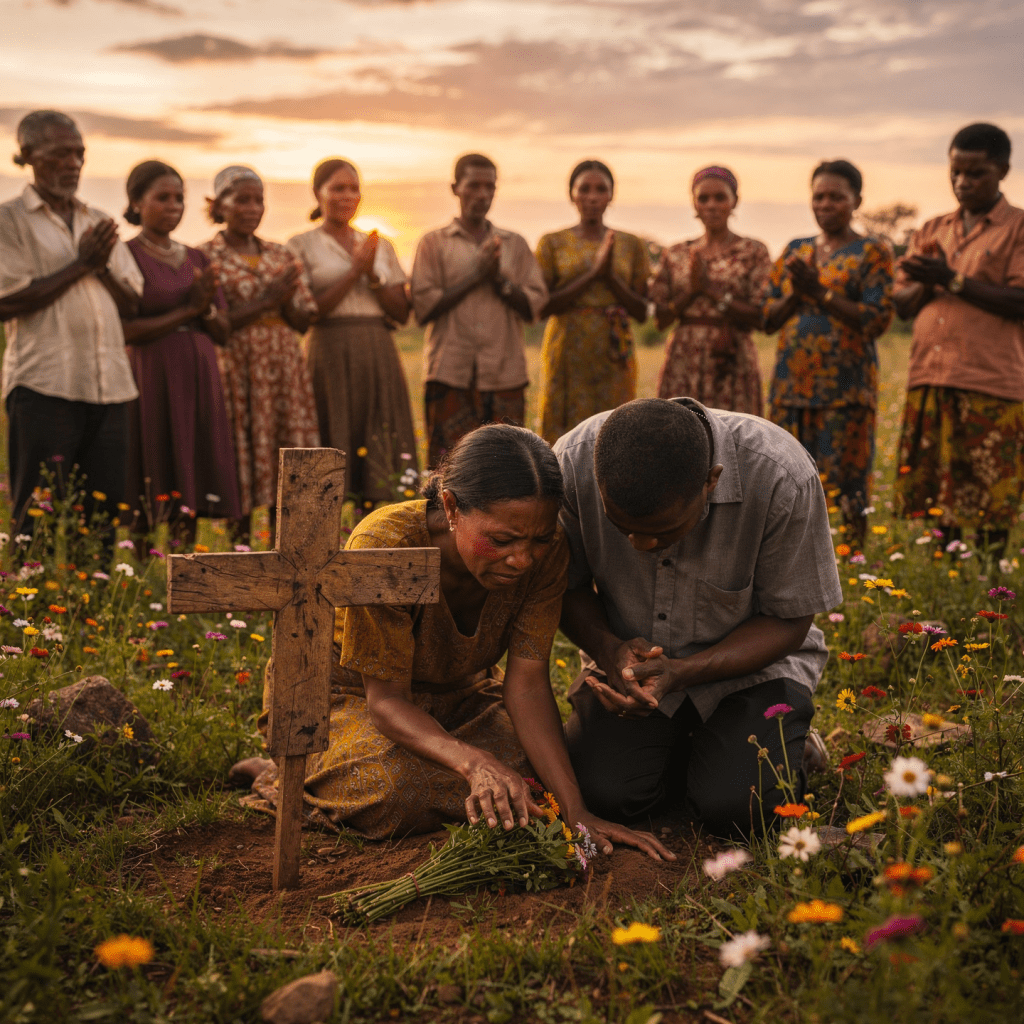
On February 5th, our dear friends lost their only son 11 days before his 11th birthday. Another friend’s 6-days old baby also died on January 29th. The death of a child ruptures the natural order of life in a way few other losses do. Parents expect to see their children grow, marry, and carry on after them—not to lay them in the ground. When this unthinkable tragedy strikes a family in our congregation, we must ask ourselves: How do we comfort grieving parents through this dark valley? How do we help them honor both their overwhelming sorrow and their calling to continue living?
The Tension Between Grief and Life
Scripture never asks us to choose between grieving and living—it calls us to both. The apostle Paul writes, “We do not want you to be uninformed, brothers, about those who are asleep, that you may not grieve as others do who have no hope…” (1 Thes 4:13). Notice carefully what Paul does not say. He does not say “do not grieve.” He acknowledges grief as the natural, God-given response to loss. Yet he qualifies it: we grieve with hope.
This is the distinctive Christian tension. We weep because death is an enemy, the wages of sin, an intruder into God’s good creation (1 Cor 15:26; Rom 6:23). Jesus himself wept at Lazarus’s tomb even knowing He would raise him minutes later (John 11:35). Our tears honor the weight of what has been lost. But we also rest in God’s sovereignty, trusting that “for those who love God all things work together for good, for those who are called according to His purposes…” (Rom 8:28). This does not mean the death was good—it means God will ultimately bring good even from this evil.
Parents who have lost a child must be given full permission to grieve deeply and for as long as necessary. There is no timeline for such sorrow. Job sat in ashes for seven days before speaking (Job 2:13). David fasted and wept while his child was dying, then rose to worship when the child died (2 Samuel 12:15-23)—not because his grief ended, but because he entrusted his child to God’s care.
Grief is not overcome; it is carried. It becomes part of who we are.
Yet grief must not become an idol that prevents parents from fulfilling the callings God has placed upon their lives. They are still spouses to each other, still parents to other children, still members of the body of Christ, still image-bearers with purposes to fulfill. The question is not whether to continue living, but how to live while carrying this profound loss. The answer lies in dependence upon God’s grace, which is sufficient even here (2 Corinthians 12:9).
The Brutal Reality of the “Firsts”
Anyone who has walked through significant loss knows that grief comes in waves, and the largest waves often crash on special occasions. For parents who have lost a child, the “firsts” are especially excruciating.
The first night returning to a home that feels emptier than it should. The first time setting the table with one fewer place. The first car ride in a vehicle that once held their child’s laughter. The first Sunday morning when they walk into church and see other families whole. The first birthday that will never be celebrated (As I publish this article, it is the birthday of one of their daughters… it will be one without him.) The first Christmas without their child’s voice…
Each “first” is its own Gethsemane, a moment when parents must cry out as Christ did, “Father, if possible, let this cup pass from me” while also surrendering to “not my will, but yours be done” (Matthew 26:39). These moments require extraordinary grace.
Friends and the church family must be especially attentive during these times. Mark your calendars. Remember the child’s birthday, the date of death, and major holidays. Reach out proactively. Your message need not be eloquent; a simple “I’m thinking of you today and praying for you” can be a lifeline. Let them know they are not alone, that their child is not forgotten.
Do not be surprised if grief that seemed manageable suddenly overwhelms them during these firsts. “A time to weep, and a time to laugh; a time to mourn, and a time to dance” (Eccl. 3:4)—and sometimes the weeping returns when we least expect it. This is normal. This is healthy. Point them again to the God who “heals the brokenhearted and binds up their wounds” (Psalm 147:3).
The Comforting Reality of God’s Sovereignty
God is sovereign even over events we cannot understand. “The LORD gave, and the LORD has taken away; blessed be the name of the LORD” (Job 1:21). This is not cold fatalism but humble submission to a God whose wisdom infinitely exceeds our own (Isaiah 55:8-9). We may never know why in this life, but we trust the character of the One who knows.
We also rest in the doctrine of God’s providence—that he works all things according to the counsel of his will (Ephesians 1:11), and that nothing, not even death itself, can separate us from his love (Romans 8:38-39).
These truths do not erase the pain, but they provide an anchor when the waves threaten to pull us under.
For parents who have lost a child, there is also the tender promise of reunion for those who die in Christ. David’s confidence that he would “go to him” though his child could not return to him (2 Sam 12:23) speaks to the biblical hope of eternal life. While we must be careful not to presume salvation for any individual apart from faith in Christ, we entrust our children to the God who is more merciful than we are, more loving than we are, and perfectly just in all his ways.
The goal is not to “get over” the loss or to “move on” as if their child never existed. The goal is to learn to live in a new reality, carrying the sorrow while also receiving the grace God provides for each day.“Therefore do not be anxious about tomorrow, for tomorrow will be anxious for itself. Sufficient for the day is its own trouble.” (Matthew 6:34). And sufficient for each day is God’s grace to sustain.
The Church’s Sacred Responsibility
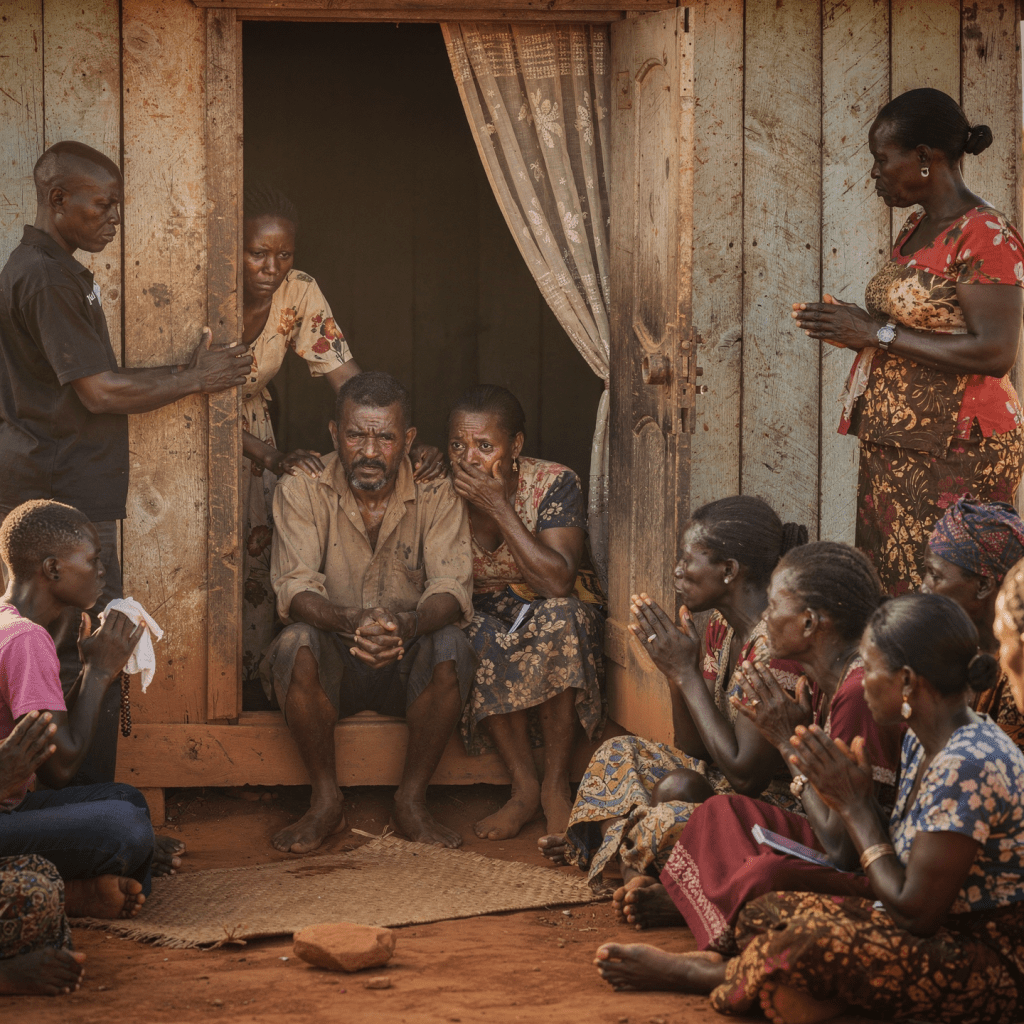
The church is a family bound together by the Holy Spirit. When one member suffers, we all suffer (1 Cor 12:26). The loss of a child is not just a private tragedy—it is a wound to the entire body.
In the immediate aftermath, the church’s presence must be tangible and practical. Provide meals. Handle logistics they cannot face. Sit with them in silence when words fail. “Weep with those who weep” (Romans 12:15) is not a suggestion but a command. Your presence communicates what your words cannot: you are not abandoned.
Yet as the weeks turn to months, the church must resist two temptations.
The first is to disappear once the initial crisis passes. Grief does not follow the world’s schedule. The second wave of sorrow, when everyone else has returned to normal life, can be even harder than the first. Continue reaching out. Continue showing up. Continue remembering.
The second temptation is to smother grieving parents with constant attention, never allowing them the space to breathe, to process, to simply exist in their pain without an audience.
This is a delicate balance, requiring wisdom and discernment. Some days they need the body gathered around them; other days they need permission to withdraw and rest.
The key is to maintain consistent contact while respecting their rhythm. Check in regularly, but don’t demand immediate responses. Extend invitations without pressure to accept. Offer specific help rather than vague “let me know if you need anything.” Say, “I’m bringing dinner Tuesday—do you prefer chicken or beef?” rather than waiting for them to ask.
Create space in community life for their grief. Acknowledge the loss publicly when appropriate. Pray for them by name in corporate gatherings. Remember their child in ways that honor the parents’ wishes. Some want to speak their child’s name often; others find it too painful at first. Follow their lead.
The Indispensable Ministry of Prayer
“The prayer of a righteous person has great power as it is working” (James 5:16). If we believe this— we affirm the sovereignty of God in answer to prayer—then our intercession for grieving parents is not a nice gesture but a vital ministry.
Pray for them in your private devotions. Pray for supernatural peace that surpasses understanding to guard their hearts and minds (Philippians 4:7). Pray that God would be near to their broken hearts (Psalm 34:18). Pray for their physical health, as grief exhausts the body. Pray for their marriage, as tragedy can either unite or divide. Pray for any surviving children who are navigating their own loss. Pray for their faith to endure this fierce testing (1 Peter 1:6-7).
But also pray with them when you have opportunity. Ask permission first—not everyone is ready to pray aloud in their raw state—but if they are willing, intercede together. There is profound comfort in hearing another believer cry out to God on your behalf. Let them hear you acknowledge their pain honestly before the throne of grace. Let them hear you cling to God’s promises when they cannot find words themselves. Let them hear you ask God for strength to face the next hour, the next day.
Do not offer false comfort or trite explanations in your prayers. God does not need you to defend his ways. The book of Job reminds us that sometimes the most faithful prayer is simply, “Why?” (Job 3:11). Lament is a biblical category of prayer. The Psalms give us language for crying out in anguish while still trusting God’s character (Psalm 13, 22, 88). Teach grieving parents that they can bring their raw, unfiltered sorrow to God—he can handle it.
As a church, we walk through the valley of the shadow of death alongside our brothers and sisters, knowing that even here, we need fear no evil, for our Shepherd is with us (Psalm 23:4). We provide love without smothering, space without abandoning, truth without triteness, and hope without minimizing pain.
To parents in the midst of this unimaginable loss: your grief honors the love you have for your child. Take all the time you need. Lean on the body of Christ. Cry out to God with everything in you. And when you cannot pray, let us pray for you and with you. The God who collects every tear in his bottle (Psalm 56:8) sees you, knows you, and will carry you through.

 Madagascar 3M