
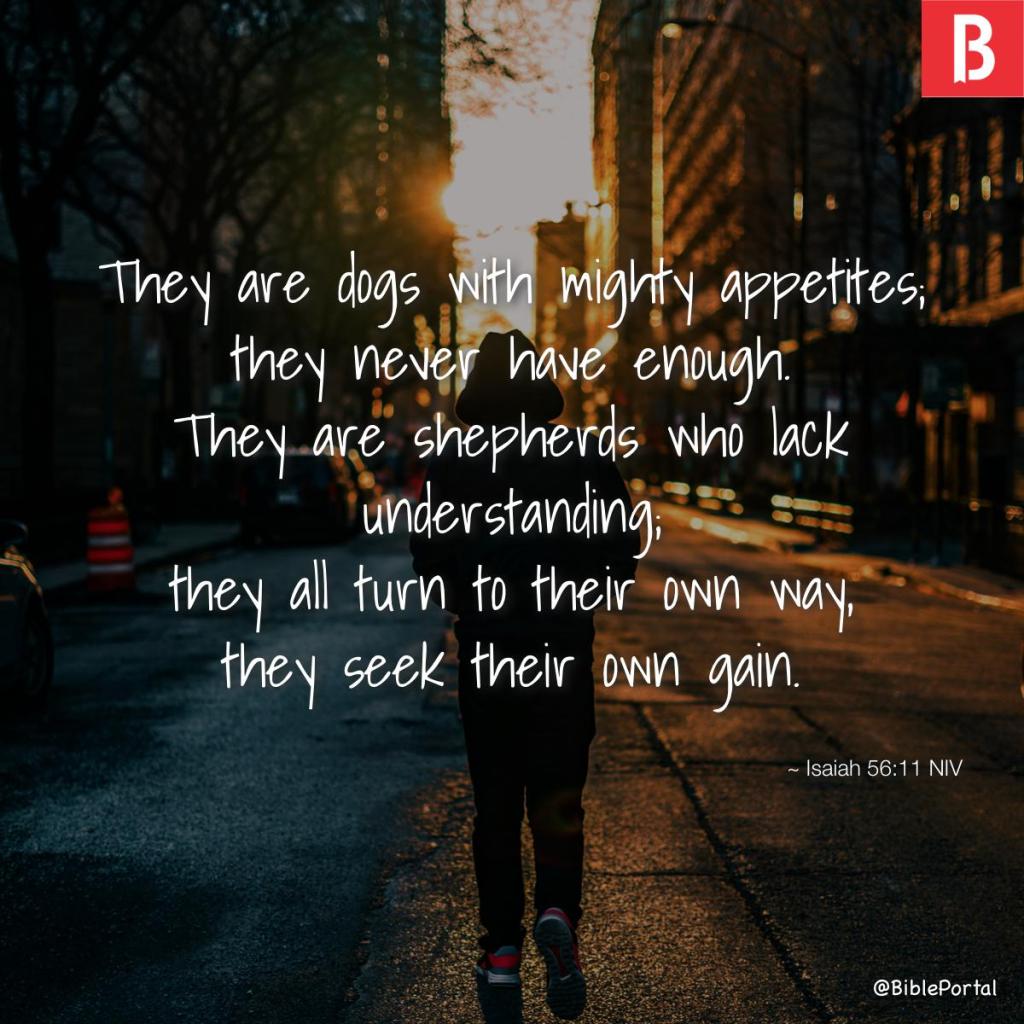
There is something strikingly unflattering about God’s choice of metaphor in Isaiah 56:11. He does not compare corrupt leaders to foxes — cunning and sly. He does not call them wolves, fearsome and predatory. He calls them dogs. In the ancient Near Eastern world, this was among the sharpest insults a man could receive. Dogs were not the cute domestic companions of today but scavengers of streets, feeding on garbage, driven entirely by their hunger. And yet God, through His prophet, applies this image not to common criminals, but to leaders — political rulers and shepherds of God’s own people.
The indictment is threefold and devastating:
- these leaders have insatiable appetites,
- they lack spiritual understanding,
- and they have each turned to their own private gain.
This is a comprehensive portrait of leaders that have become the very opposite of what God requires. And lest we think this was merely an ancient problem, have you looked at governments and church leadership scandals around the world today?
We live in an era intoxicated by power, saturated with sexual scandal, addicted to influence, and transfixed by wealth. The dogs of Isaiah’s day have not disappeared — they have simply put on suits and clerical collars.
Here, I want to reflect on the greed that has corrupted leadership in the church and in the political arena, but also give a sobering reminder of what awaits those who exploit the people they were called to serve.
I. The Appetite That Devours
Isaiah’s imagery begins with the stomach. “They have a strong appetite; they do not know satisfaction.” The Hebrew word for “strong appetite” speaks of a craving that is never filled, a hunger that grows even as it feeds. This is the spiritual problem of greed: it promises satisfaction and delivers only a deeper hunger.
We see it in political leaders who hoard power with ferocity. They pass laws that benefit themselves, build networks of personal loyalty, and treat public office as a platform for personal enrichment. They accumulate comfort, and control. The belly grows; the people suffer.
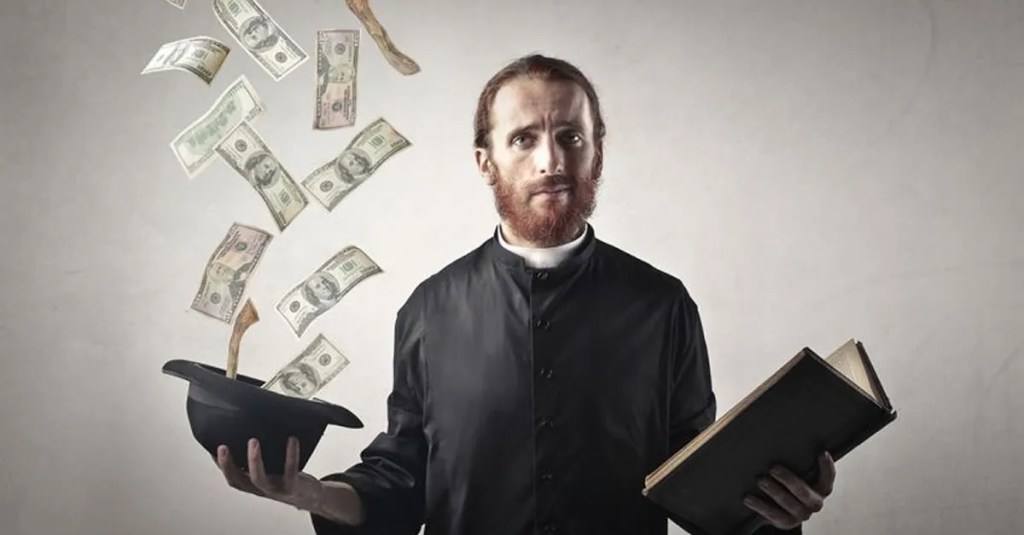
We see it, tragically, in the church as well. The prosperity gospel — that theological catastrophe dressed in spiritual and emotional garb — has produced a generation of church leaders who live like emperors while their congregations struggle to make rent. Private jets, luxury compounds, and designer wardrobes have become the symbols of “God’s blessing” in certain circles. But the prophet’s question thunders across the centuries: How can a shepherd feast while the sheep go hungry?
Materialism is not merely a financial sin — it is a theological one. To love money, as Paul warns in 1 Timothy 6:10, is a root from which countless evils grow. When a leader’s heart is set on material acquisition, he has already committed a form of idolatry. He has exchanged the glory of the incorruptible God for the perishable things of this world. The big belly is the symptom; the idolatrous heart is the disease.
We cannot serve two masters (Mat 6:24); is your belly your master?
II. The Craving that Overcomes
If materialism is the corruption of the appetite for provision, the lust for power and influence is the corruption of the appetite for significance. Both are God-given desires twisted by sin into instruments of exploitation.
Isaiah says these leaders “have all turned to their own way.” This phrase is arresting. Not one or two, but all. The entire leadership class has become self-referential. Their decisions orbit around their own interests, their own legacies, their own kingdoms. This is the anatomy of power-hunger: a leader who, rather than existing for the people, requires that the people exist for him.
In the political realm, this manifests as an obsession with electoral survival at the cost of moral integrity. Leaders compromise on justice, silence truth-tellers, punish the powerless, and protect their allies — all to maintain the throne. They speak of the people but think of themselves. They invoke God’s name to sanctify ambitions that are entirely self-serving.
In the church, power-hunger takes on a more sinister character because it masks itself in spiritual language. The authoritarian pastor who brokers no accountability, who silences others, who demands absolute loyalty — he is not a strong leader. He is a dog with a strong appetite for control. The cult of personality that surrounds many celebrity preachers is not the fruit of spiritual authority; it is the fruit of unchecked ego dressed in a preaching robe.
Jesus, our great High Shepherd, said it plainly: “The greatest among you shall be your servant” (Matthew 23:11). Any leader in the church or in the public square whose chief preoccupation is protecting his own influence has already disqualified himself from the kind of leadership God honors. The truly great leader makes himself small so that those entrusted to his care may grow.
III. The Lust that Consumes
No reflection on corrupt leadership today can be complete without addressing sexual sin, which has ravaged institutions across every sector of society. The Jeffrey Epsteins, the Harvey Weinsteins of Hollywood, the political figures whose hidden lives are exposed in scandal, and — most grievously — the pastors and ministry leaders who have used their spiritual authority to exploit the vulnerable: all of them trace back to the same root of unrestrained appetite.
The dog is not selective about what it feeds on. The leader whose heart is never disciplined, never submitted to accountability, never mortified through the hard work of sanctification, will inevitably find that his uncontrolled appetites do not confine themselves to money or power. Sexual sin and financial greed are, in the Scriptures, deeply related. Both are expressions of an inner man who has never learned to say “enough.”
The damage such leaders leave behind is immeasurable. Women silenced. Young people disillusioned from faith. Families shattered. Congregations traumatized. Outside observers cynical. And all of it done under the cover of a title — “Pastor,” “Bishop,” “Reverend,” “President.” The title becomes a hunting license for predators when no accountability structure exists to constrain it.
God is not confused about what is happening behind closed doors. “Would not God find this out? For He knows the secrets of the heart” (Psalm 44:21). The prophet’s warning is not optional. Those who use their positions to satisfy sexual appetite will answer to a Judge whose vision is perfect and whose verdict is just.
IV. The Failure That Condemns
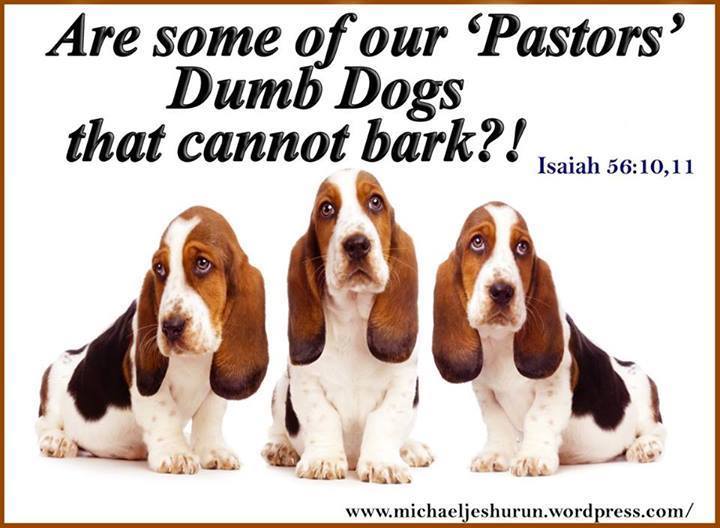
There is a particular phrase in Isaiah 56:11 that deserves its own meditation: “shepherds who do not know understanding.” The Hebrew word for understanding here is often translated “wisdom” or “discernment.” These leaders are not merely morally corrupt — they are spiritually dumb. Their greed has made them foolish.
This is one of sin’s most devastating consequences: it darkens the mind. Paul tells us in Romans 1 that the rejection of God leads to a futile mind and a darkened heart (Romans 1:21). When a leader gives himself over to greed, lust, and the hunger for power, he progressively loses the capacity for moral clarity. He begins to believe his own rationalizations. He surrounds himself with people who will not challenge him. He develops an inability to see what everyone around him can plainly see.
We witness this in leaders who display staggering moral obtuseness — who seem genuinely incapable of understanding why their behavior is harmful, or who, when confronted, respond with self-pity rather than repentance. This is not primarily a failure of intelligence. It is a failure of the soul. When the belly rules, the brain atrophies. Big belly, small brain.
True leadership requires wisdom, and wisdom begins, as Proverbs tells us, with the fear of the Lord (Proverbs 9:10). A leader who does not fear God will never lead well, because the fundamental orientation of his soul is wrong. He is answerable to no one above him, and so he becomes accountable to nothing but his own desire. This is the definition of a fool in the biblical sense — not a lack of IQ, but a lack of reverence.
V. The God Who Will Not Be Mocked
One might be tempted, reading this far, toward despair. If corruption is so pervasive, if leaders so reliably fail, what hope remains? The answer of Scripture is severe but ultimately glorious: God Himself will act.
The broader context of Isaiah 56 is a passage about God’s expanding welcome — the foreigner, the eunuch, the outcast are all invited into His house of prayer. The corrupt shepherds are exposed precisely because God’s concern for His flock is absolute. He will not indefinitely permit the exploitation of those He loves.
Isaiah 56 continues into chapter 57 with one of the most searing divine indictments in all of Scripture. God speaks with the kind of righteous anger that should cause every leader to tremble: “But the wicked are like the tossing sea, for it cannot be quiet, and its waters toss up refuse and mud. ‘There is no peace,’ says my God, ‘for the wicked.’” (Isaiah 57:20–21)
Jesus reserves His most intense language for those who harm His sheep. “Whoever causes one of these little ones who believe in Me to stumble, it would be better for him to have a heavy millstone hung around his neck, and to be drowned in the depth of the sea” (Matthew 18:6). The Shepherd of souls speaks with the severity of a Father whose children have been hurt. The corrupt shepherd, the exploitative politician, the predatory pastor — they are not dealing with a distant and indifferent God. They are standing before the Lion of Judah.
Ezekiel 34 is perhaps the most comprehensive divine response to corrupt leadership in all of the Old Testament. God speaks directly to the shepherds of Israel who have fed themselves rather than the flock:
“Thus says the Lord God: Behold, I am against the shepherds, and I will require my sheep at their hand and put a stop to their feeding the sheep. No longer shall the shepherds feed themselves. I will rescue my sheep from their mouths, that they may not be food for them.” — Ezekiel 34:10
This is not metaphorical language designed to comfort the comfortable. God is declaring His personal opposition to those who exploit those under their care. He will hold them accountable. He will remove them from their positions. And He will rescue the sheep they have harmed. No political immunity, no church platform, no financial power will shield a corrupt leader from the judgment of the Living God.
The church of Jesus Christ must resist the temptation to critique political corruption while remaining silent about its own. The Evangelical world has been rocked in recent years by a cascade of revelations — pastoral abuse, financial fraud, sexual scandal, spiritual manipulation. Every one of these represents a shepherd who had a strong appetite and did not know satisfaction.
Churches must build robust accountability structures. Elders must be genuine, not decorative. Financial transparency must be non-negotiable. Leaders who resist accountability must be recognized for what they are: dogs who do not want to be restrained. The willingness to submit to accountability is not a sign of weak leadership — it is one of the surest marks of godly character.
And the congregation — the flock — bears a responsibility as well. When we build celebrities rather than servants, when we fund excess rather than holding leaders to simplicity, when we treat charisma as a substitute for character, we participate in the very system we should be dismantling. The sheep are not innocent when they build golden calves and call them pastors.
The Day that Is Coming
Isaiah’s prophecy was not merely descriptive — it was anticipatory. The corrupt leaders of his day were the symptom of a people who had turned from God, and the consequence was judgment. But embedded in the book of Isaiah is also the magnificent promise of a Servant who would not break a bruised reed, a Shepherd who would lay down His life, a King whose government would bring genuine justice and peace (Isaiah 9:6–7; 42:1–4).
Until Christ returns to reign, corrupt leaders will continue to appear in the church and in the public square. They will continue to feed their appetites at the expense of those they were called to serve. They will continue to mistake their position for their identity and their platform for their purpose.
But the day is coming when every shepherd will give an account for every sheep. The day is coming when the Judge of all the earth will ask what was done with the authority He granted. On that day, big bellies will offer no comfort, and small brains will offer no excuse.
May the church lead the way in repentance, in accountability, and in the recovery of servant leadership. May those entrusted with political power govern with justice, humility, and transparency. And may every leader — in the church or in the world — hear again the ancient warning of the prophet, and tremble before the God who sees all, forgets nothing, and will, in His time, make all things right.

 Madagascar 3M