

It is quite difficult to summarize a whole year from a Christian perspective. Many affirm that the influence of Christianity, especially in Western countries, has reached historic lows. However, others notice a resurgence of Evangelical Christianity with many public displays of faith such as the March for Jesus in Dublin, with organizers estimating up to 12,000 attendees, on October 26th.
Three ‘events’ that took place this summer epitomize 2024 for global Christianity.
1- Elon Musk and Cultural Christianity
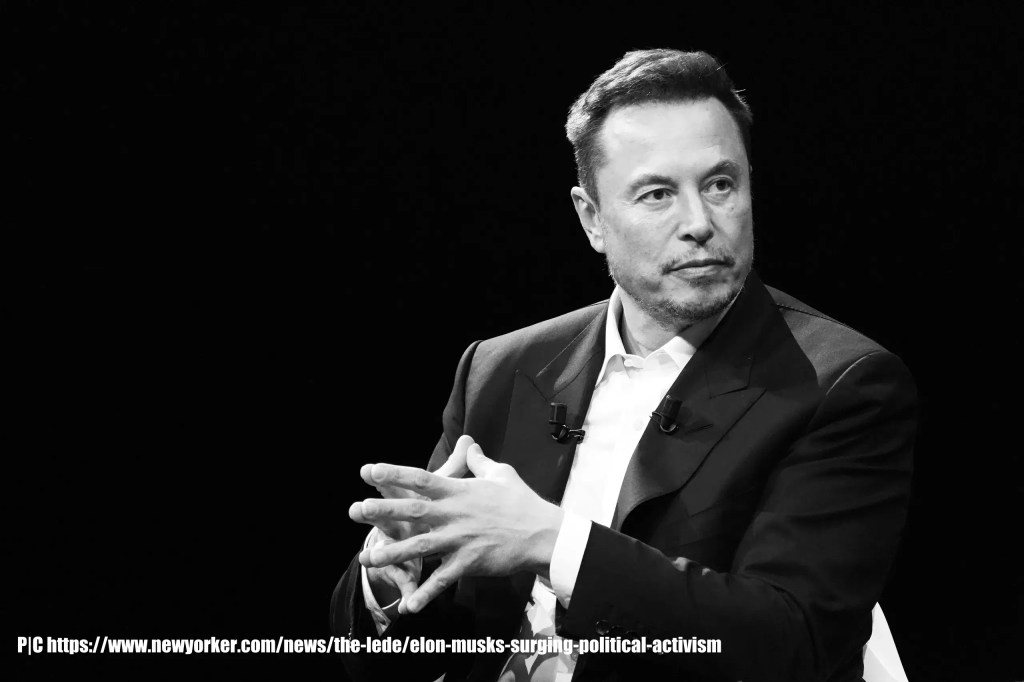
Elon Musk, the founder of SpaceX and Tesla, is often associated with innovation and technology rather than overtly religious beliefs. In an interview with Jordan Peterson on July 23rd, Elon Musk, indubitably the richest and one of the most powerful men in the world, declared himself to be “a cultural Christian”. Musk, who in the past identified as an atheist or an agnostic, divulged his admiration for Christianity:
“While I’m not a particularly religious person, I do believe that the teachings of Jesus are good and wise. … I would say I’m probably a cultural Christian. There’s tremendous wisdom in turning the other cheek.”
He went on to say that Christian beliefs,
“result in the greatest happiness for humanity, considering not just the present, but all future humans. … I’m actually a big believer in the principles of Christianity. I think they’re very good.“
A few days later, in response to the Olympics’ opening ceremony, Musk said “Unless there is more bravery to stand up for what is fair and right, Christianity will perish.” Granted, Christians need to be more bold for their faith, but here are a few issues with Musk’s perspective:
Christianity will not perish
Jesus Himself declared “…I will build My church; and the gates of Hades will not overpower it.” (Mat 16:18b) and also, “…In the world you have tribulation, but take courage; I have overcome the world.” (John 16:33) Paul confirms “What then shall we say to these things? If God is for us, who is against us?” (Rom 8:31)
Unlike with cultural Christianity, believers have the confidence to be on the winning side as the Lord reigns supreme over all things.
Christianity is about Faithfulness not Achievements
Musk’s work with advanced technologies reflects a contemporary understanding of progress that is often divorced from traditional religious frameworks. His focus on renewable energy, space exploration, and artificial intelligence can be seen as an interpretation of humanity’s God-given mandate to subdue and have dominion over the earth (Genesis 1:28), and not a faithful submission to Him.
Musk’s rhetoric, when addressing the existential risks facing humanity, including climate change, technology and artificial intelligence, suggests a moral imperative to confront these challenges, hope, perseverance, and the importance of working towards a better future. These resonate with Christian teachings.
However, Christianity’s hope resides in Christ’s return, not human betterment.
Musk embodies a proactive engagement with ethical dilemmas connected to the development of artificial intelligence (AI) and its implications, advocating for responsible innovation that aligns with a progressive vision of humanity’s future. However, his quest for technological ethical practices and stewardship is not built upon a dependance and surrender to Christ.
Musk even posits that humanity must become a multi-planetary species to ensure its survival. No, men must surrender their lives to Christ, live in faithful obedience to His commands, and hope for the new heavens and the new earth in His presence (Rev 21:1-7).
Christianity is Christ-centered, not man-centered
Musk represents a new kind of visionary—a figure who pushes the boundaries of human capability and reflects a belief in the possibility of redemption through innovation. He embodies in his entrepreneurial journey individualism and personal purpose. He represents the archetype of the self-made individual, challenging conventional wisdom and pursuing his vision regardless of societal limitations or norms.
There is much to be celebrated in his creativity, entrepreneurship and drive. But it is self-centered. His story of perseverance, work ethos, failure, and ultimate success can serve as inspiration, but it is not pointed to the ultimate source of purpose and satisfaction, the Lord Jesus Christ.
The tension between personal ambition and surrender is palpable, and this dichotomy reflects the broader challenge with the increasingly popular conservative cultural Christianity. Cultural Christianity becomes a framework for exploring spirituality outside of Christ.
Ultimately, Musk’s embodiment of cultural Christianity serves as an intriguing case study for understanding modern spirituality and the evolving relationship between faith and human innovation.
2 years ago, the Christian satire website missed the opportunity to clearly share the Gospel with Elon Musk when they interviewed him. He, and all those who believe in some form of cultural Christianity need to heed the words of Scripture: “…Believe in the Lord Jesus, and you will be saved…” (Acts 16:31a)
2- Olympics’ Outrage and Testimonies
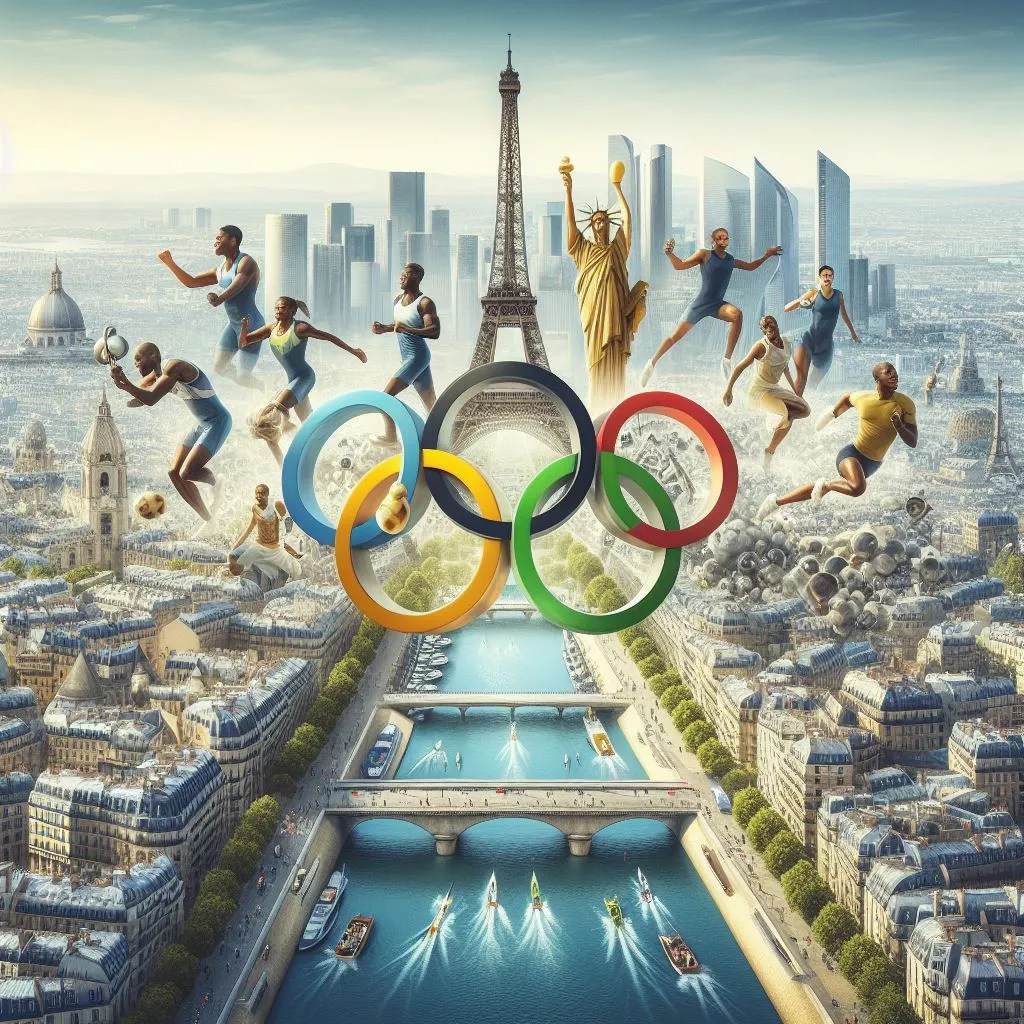
E tenebris oritur lux. Out of darkness comes light.
The 2024 Olympics were the most polarizing ever. Yet, that is not necessarily a bad thing. Blurred lines hurt a society. Blurred lines hurt the church’s testimony.
The Opening Ceremony was a celebration of sin, not of sport. Thomas Jolly, the ceremony director, decided to go beyond the Olympic spirit and promote the dominant social trends in France, deeply rooted in “wokism”. Drag queens, “queer” dancers, polyamory, blatant idolatry, and blunt mockery of Christianity were all on display.
However, as a result of the controversies from the opening ceremony, the polemics about transgender boxers and the attempts to caricaturize and belittle Christians:
- Every Christian blogger on the planet took this opportunity to contend for the faith
- Many Christians worldwide were bolstered to stand as faithful and loving ambassadors of the truth as they realized their faith was under attack.
- The Woke movement was exposed for what it is, and many recognized its aberrations.
- Mainstream media worldwide jumped in to defend Christians from a religious liberty point of view.
- And last but not least, Christian athletes spoke more boldly about their faith than ever before.
When German shot-putter Yemisi Ogunleye was asked how she approached that decisive final throw for the gold medal, she replied, “Before the last attempt, I didn’t think about anything but just lifted my hands and prayed. … After seeing where the shot landed, when I knew it was hopefully going to be enough for the gold medal, I just went on my knees and said, ‘Thank you, Jesus.’”
At the end of the post-event press conference, the moderator asked Ogunleye, “Is it true that you sing in a gospel choir? What song was going through your head tonight?” She responded with an impromptu rendition of “God Kept Me” by Harvey Watkins Jr.
Marileidy Paulino, who started her career running barefoot because she couldn’t afford shoes, became the first woman from the Dominican Republic ever to win Olympic gold by breaking the Olympic record. At the Tokyo Olympics, she held a Bible after earning silver three years ago. This time, Paulino knelt and prayer after crossing the finish line. She thanked God for her opportunity to excel on her country’s behalf.
British diver Andrea Spendolini-Sirieix said, “I give glory to God,” and quoted Joshua 1:9 on her Instagram page after earning bronze with partner Lois Toulson in the 10-meter platform synchronized diving competition.
“This is more than just sport,” she added. “I am proud to represent my country, my family, and glorify the name of Jesus.”
Sydney McLaughlin-Levrone, who qualified for her first Olympics while still in high school, broke her own world record in the 400-meter hurdles. Her husband is studying theology at The Master’s Seminary in California (which is where I also studied) and they have both used the platform God has granted them to make their Christian testimony widely known. Sydney even wrote a book called “Far Beyond Gold: Running from Fear to Faith.”
During the post-race interview in the Olympics, she declared “I credit all that I do to God. He’s given me a gift, he’s given me a drive to just want to continue to improve upon myself, and I have a platform and I want to use it to glorify Him…So whenever I step on the track, it’s always the prayer of ‘God, let me be the vessel in which you’re glorified, whatever the result is’—how I conduct myself, how I carry myself, not just how I perform. So it’s just freedom in knowing that regardless of what happens, he’s going to get the praise through me. That’s why I do what I do.”
Amen! That is true Christianity. That is living knowing Christ and making Him known!
3- The Fourth Lausanne Congress in Seoul
This one is potentially the most controversial point of the 3, but if you have read to this point, you should be able to endure through to the end.
You may not be familiar with the Lausanne movement. It was founded by Billy Graham, Leighton Ford and John Stott in 1974 to accelerate and build better collaboration for world evangelism. The first meeting was held in Lausanne, Switzerland, thus the name of the conference that sticked afterwards.
The Fourth Lausanne Movement Congress, gathering over 5,200 people from 202 nationalities in Incheon-Seoul, South Korea, sought to accelerate global outreach through collaborative efforts, promoting unity in diversity. The theme of the Congress was “Let the Church Declare and Display Christ Together.”
The Congress ended with a call to joint action through signing the ‘Collaborative Action Commitment’, stating on paper the signatories’ intention to:
- “respond to the Great Commission by filling gaps and seizing opportunities”,
- seek “relationships and unity with leaders”,
- work to “remove duplication and silos by celebrating others”
- “identify existing collaborative initiatives”
- and by addressing “together” the challenges facing the global church.
I do not wish to remove anything from the amazing experience lived by those who attended, notably when people from over 200 nations worship the Lord and fellowship together as a foretaste of Revelation 7:9, but unity in diversity is hard to achieve. Especially when the diversity is related to doctrine. Congresses and joint declarations are nice, but they fail to conceal and properly address the issues wrought by diverging theological perspectives.
As an example, Ruth Padilla DeBorst addressed the challenge of social injustices. As part of her presentation, she made two remarks that made some participants uncomfortable. She stated that “There’s no room for indifference towards all who are suffering the scourge of war and violence. The world around the uprooted and beleaguered people of Gaza, the hostages held by both Israel and Hamas and their families, the threatened Palestinians in their own territories”. Then, at another point, Padilla lamented that “colonialist theologies that justify and finance oppression under the guise of some dispensational eschatology”.
An email apology signed by the event’s director, David Bennett, had to be issued. Her singling out and critic of ‘dispensational eschatology’ and her failure to express comparable empathy for the suffering of Israeli people were flagged as they caused an avalanche of opinions and informal conversations at the conference.
In other examples, one of the speakers passionately and graciously reprimanded cessationists, claiming they denied the power of the Holy Spirit. Creation care was outlined as a justice issue, but the proposed solutions echoed secular narratives. Rick Warren was invited and given a prominent platform from which he reprimanded complementarians, suggesting they overlook Joel 2. An American Pentecostal presenter, in his excitement, asked everyone to raise their hand if they considered themselves “Spirit-filled” believers. The talks on social justice related issues often reflected a liberal and postmodern lens: creation care, gender gaps, anti-colonialism, and critiques of capitalism. There was also no mention of abortion or the current capitulation of the church when it comes to same-sex marriage. In a nutshell, certain viewpoints were given a platform while others were delicately excluded.
And here resides one of the main problems: The Lausanne Congress become so “issues-driven” that the emphasis on world evangelization, which used to be central, has now been buried down to just one emphasis among many. The main thing is no longer the main thing per se.
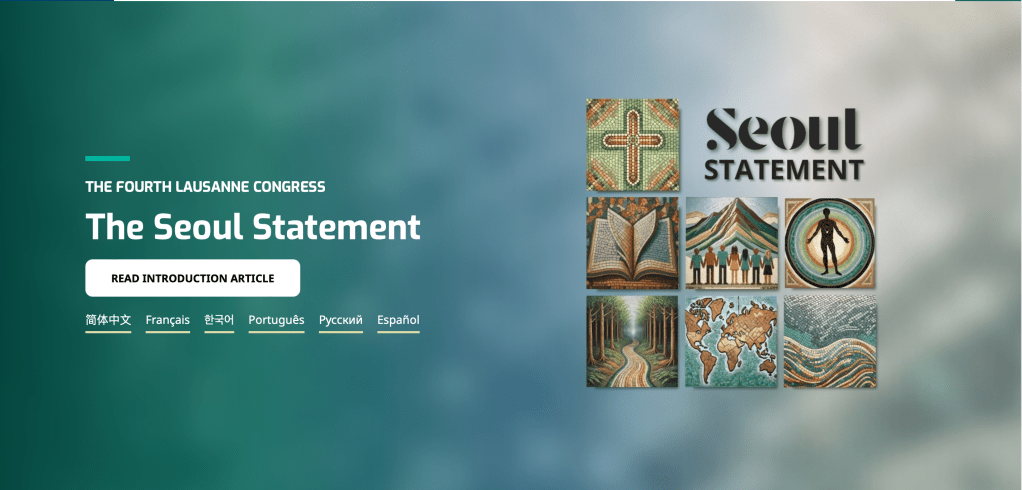
At the heart of all the disagreement is a simple question: What is the mission of the Church? During the congress, The Seoul Statement Seoul Statement was released, and it generated a lot of discussion. It outlines seven key themes for the global evangelical church: a biblical theology of the gospel, a strong view of Scripture, doctrine of the church, and a vision for humanity and biblical sexuality, discipleship, global conflict, and technology.
None of these are inherently bad, but there needs to be a clear delineation of emphasis on evangelism over social action. The Seoul Statement wrestles with the tension, striving to give equal weight to both “incarnating the gospel” and “holistic gospel”, and as a result dilutes the Gospel.
When everything becomes a gospel issue, nothing is actually the Gospel, nor the issue.
So What?
As the church looks ahead to 2025, we need to make sure that the Gospel remains central and is proclaimed by words and deeds. Theological clarity, triage and discernment are more needed than ever in a world where the words “evangelical” and “church” have lost their intended meaning.
God will always have His remnant throughout the ages. The church must endeavor to be a pillar and buttress of the truth (1 Tim 3:15). And the church must seek to be faithful in the Lord’s eyes before seeking to be attractive in the world’s eyes.
May our testimonies be bold, sincere, earnest and powerful as we trust, obey and proclaim our Lord Jesus Christ.
Happy and blessed year everyone!


 Madagascar 3M
Thank you for your post.
God bless the work of His ministry in Madagascar. Praying for you.
Pray for U.S.A; that the gospel will penetrate every state of this union.
The State of Gods word and the State of Gods character never waivers and may His church be faithful in abiding in Him.
Maranatha, Ben
LikeLike
Thank you for your post.
God bless the work of His ministry in Madagascar. Praying for you.
Pray for U.S.A that the gospel will penetrate every state of this union.
The State of Gods word and the State of Gods character never waivers and may His church be faithful in abiding in Him.
Maranatha, Ben
LikeLiked by 1 person
Thank you. I found this thought provoking and helpful.
**** Pst. Julian Hardyman Misionera, Hopitaly Vaovao Mahafaly, Mandritsara, Madagascar
UK address 56 Windsor Road Cambridge CB4 3JN
LikeLiked by 1 person