
A Reflection on 1 Timothy 5:24–25
The news broke with the kind of weight that settles slowly. Sam Alberry, long celebrated voice in evangelical circles on sexuality, celibacy, and same-sex attraction, has been disqualified from pastoral ministry following a report of inappropriate behavior with a man. After the initial shock, and considering the fact that many have issued warnings along the years, the greater blow was the fact that the eldership of his church had known since 2022. They evaluated his conduct at the time as “unwise,” not sinful, and allowed him to continue. He went on preaching from pulpits. He went on teaching at conferences — on homosexuality — while concealing a pattern that eventually could not be concealed.
I write this not as a man standing far off, pointing. I write this as a man who trembles. The best of men are men at best. And I am no exceptional man. I am a pastor in Madagascar, and I know my own weakness well enough to be afraid. What keeps me, what keeps any of us, is not our resolve. It is God’s grace, and the structures He has given us to live faithfully within it.
Paul wrote to Timothy: “The sins of some men are quite evident, going before them to judgment; for others, their sins follow after. 25 So also good works are quite evident, and those which are otherwise cannot be concealed.”(1 Timothy 5:24–25). Nothing stays buried. Not forever. The question is not whether hidden things will come to light, they will. The question is whether we will be men who walk in the light now, or men who are exposed by it later.
I want to walk in the light. So here, for my own soul and perhaps for yours, is a simple ABC.
A — Accountability
Provide it. Get it. Refuse to live without it.
Accountability is not a system. It is a posture. It is the decision to stop managing your image and start living honestly before God and a few trusted brothers who will tell you the truth. Proverbs 27:17 says “iron sharpens iron, and one man sharpens another”. But iron cannot sharpen what it cannot touch. You have to let people close enough to actually reach you. It means calling sin what God calls it, not “unwiseness,” not a “lapse in judgment,” not “a season of struggle.” Sin. James 5:16 is not a suggestion: “Confess your sins to one another and pray for one another, that you may be healed.” That word healed implies something was broken. Something is always broken. The question is whether we are honest about it.
It means allowing people to ask you hard questions and refusing to dodge them with spiritual-sounding half-answers. Proverbs 28:13 cuts clearly: “Whoever conceals his transgressions will not prosper, but he who confesses and forsakes them will obtain mercy.” The elders who evaluated Alberry’s conduct in 2022 and called it “unwise” were not lying, necessarily. They may have genuinely believed they were being gracious. But calling sin “unwise” is not grace, it is abandonment. True accountability names the thing, confronts the thing, and does not let a man walk back into a pulpit carrying unconfessed patterns that will, eventually, destroy him and others.
Do you have someone who knows you? Not the version of you that you present to the world, but you, your temptations, your failures, your secret drift? If not, you are already in danger.
B — Barriers
Make it hard to sin. Make it harder to hide.
I do not believe we should be paranoid men, but I do believe we should be honest men, honest enough to admit that we are capable of nearly anything under the right conditions. Joseph ran from Potiphar’s wife (Genesis 39:12). David did not flee from the rooftop (2 Samuel 11:1–2). The difference was proximity to temptation, and the presence or absence of structures that made sin difficult. Paul’s counsel to Timothy was blunt: “Flee youthful passions and pursue righteousness” (2 Timothy 2:22). The verb is active. You move. You do not wait to see if the temptation passes, you build distance from it before it arrives.
Whatever it takes (technology filters, accountability software, pastoral check-ins, avoiding certain situations, being never alone in certain contexts, etc), build the barriers. Not because you do not trust yourself, but precisely because you do not. This is wisdom, not weakness. Jesus himself said, “If your right hand causes you to sin, cut it off and throw it away. For it is better that you lose one of your members than that your whole body go into hell” (Matthew 5:30). That is not hyperbole designed to be ignored. It is a call to radical, costly, inconvenient holiness. The man who says “I don’t need those guardrails” is already closer to the edge than he knows.
And build barriers against hiding just as much as against sinning. Secrecy is the soil in which these things grow. Transparency kills them. Ephesians 5:11–13 reminds us that it is the light that exposes and transforms: “Take no part in the unfruitful works of darkness, but instead expose them… when anything is exposed by the light, it becomes visible.”
If something is happening in your life that you would be ashamed to tell your elders, that shame is a signal — not to suppress the information, but to bring it into the light before it metastasizes.
C — Conscience
Do not sear it. Do not silence it. Do not negotiate with it.
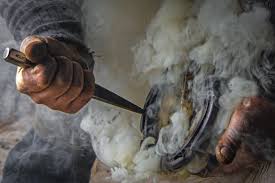
Paul warns of men whose consciences have been “seared as with a hot iron” (1 Timothy 4:2). The image is medical, a wound cauterized until it can no longer feel. This does not happen overnight. It happens slowly, through small compromises, through repeatedly telling yourself that this is the last time, through convincing yourself that your public ministry earns you private exemptions. It does not. There are no exemptions.
The terrifying thing about a seared conscience is that it does not announce itself. You do not wake up one day and think, I no longer feel the weight of sin. You simply… stop feeling it. And then you are standing at a pulpit, teaching others about holiness, and somewhere deep beneath the performance, the nerve endings that should be screaming are silent.
Your soul is at stake. So are the souls of every person who sits under your voice and trusts that the man preaching has some integrity between the pulpit and the private room. We cannot play Christian. We cannot play pastor. The stakes are eternal, for us, and for those who follow us.
A Personal Word
I want to be transparent about why I am writing this.
I am writing it for myself.
I write it as a man who knows how weak he is. I write it as a pastor who has seen what ministry pressure can do to a soul, how it can slowly crowd out the devotional life, the honest friendships, the quiet moments of genuine repentance. I write it as someone who does not find it easy to ask for help, and who is learning that not asking for help is one of the most dangerous things a pastor can do.
The news about Sam Alberry grieves me. It does not make me feel superior. It makes me feel the right kind of afraid. The Proverbs kind. “Let him who thinks he stands take heed lest he fall” (1 Corinthians 10:12). The fear of God is a gift. It keeps us humble. It drives us to prayer. It makes us reach for accountability not as an obligation but as a lifeline.
I need God’s grace and protection. I need brothers who will not let me manage my image around them. I need my prayer life to be more than a professional habit. And if you are in ministry — if people call you pastor, elder, teacher — you need these things too.
The sins of some men appear later. Let ours appear now, in the safety of repentance and restoration, before they appear on a headline.
Walk in the light. Today.

 Madagascar 3M
Amen bro
LikeLike
Great message. Thanks for your faithfulness.
LikeLike
Good words brother. One other thing that I think is most important is cultivating enjoyment of Christ. Stale devotion times are a warning sign of vulnerability to sin. Blessings and prayers to you, from the Philippines! Daniel
LikeLike